24 Feb 2026
Hybrid Flooring in New Zealand: The Complete Homeowner's Guide
Estimated reading time: 12 minutes
Hybrid Flooring in New Zealand: The Complete Homeowner's Guide
If you're renovating, building, or simply replacing tired carpet, there's a good chance hybrid flooring has landed on your shortlist. It's the most talked-about hard flooring option in New Zealand — and for good reason. But "hybrid" is a broad label, and not every product behind it is built the same way. If you're still weighing up different flooring categories, our complete guide to flooring types in New Zealand is a useful starting point.
This guide breaks down exactly what hybrid flooring is, how it performs in New Zealand conditions, where it works (and where it doesn't), and what to look for when you're comparing options. Whether you're weighing up waterproof flooring for a kitchen renovation or exploring SPC flooring for a full home install, this is the information you need to make a confident decision.
What Is Hybrid Flooring — and What Makes It Different?
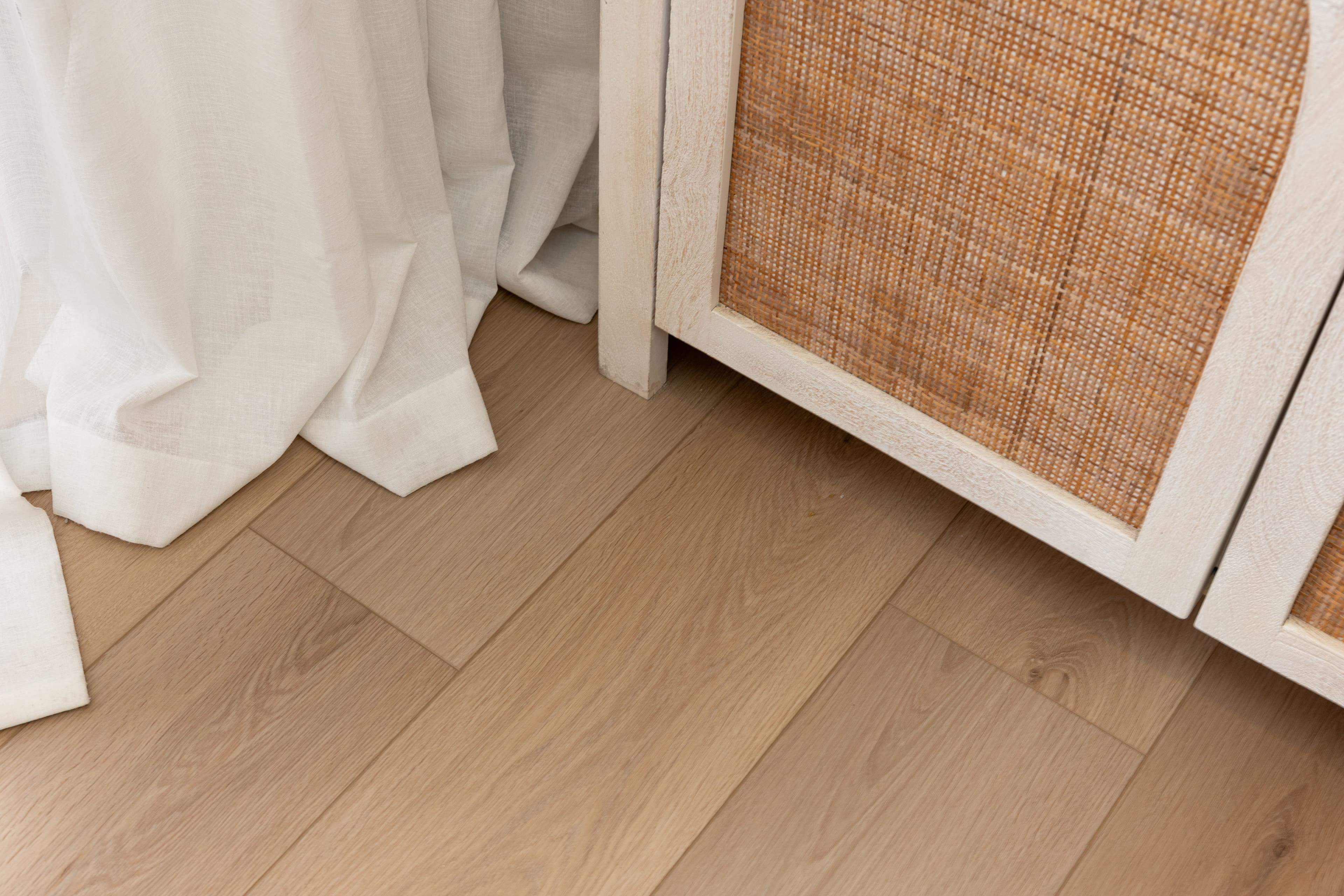
The term "hybrid" refers to a flooring product that combines the best characteristics of vinyl and laminate into a single, rigid-core plank, adding further technology to then create a better long lasting floor. The result is a floor that's waterproof like vinyl, dimensionally stable (dent resistant) like laminate, and realistic enough underfoot to rival engineered timber.
At its core — literally — is the SPC (Stone Polymer Composite) layer. This is a dense composite of approximately 60% limestone, combined with PVC and stabilisers, pressed under heat to form a rigid, waterproof core. It's what gives hybrid flooring its structural integrity and resistance to denting.
The full plank construction works in layers, each with a specific job. A UV-cured coating sits on top to protect against scratching and fading while adding to the aesthetic of the board being low or high gloss. Beneath that is the wear layer — a transparent film typically ranging from 0.3mm to 0.7mm — which determines how well the floor resists surface damage over time. Next comes the decorative print layer, where realistic timber grain patterns are rendered using embossed-in-register (EIR) technology. Below the SPC core, a pre-attached acoustic underlay (Cork, EVA or IXPE) provides sound dampening and a small degree of thermal insulation.
This layered construction is what separates SPC flooring from standard luxury vinyl tiles (LVT). Where traditional vinyl is highly flexible and relies on adhesive or a soft core, hybrid rigid core flooring uses a click-lock system that allows it to float over almost any level subfloor — no glue required. SPC is the dominant rigid core technology in New Zealand, though WPC (Wood Polymer Composite) is an alternative worth understanding — our SPC vs WPC flooring guide breaks down the key differences.

Why Hybrid Flooring Suits New Zealand Homes
New Zealand's climate is uniquely variable. Coastal humidity, seasonal temperature swings, and high UV exposure create conditions that test most flooring materials. Hybrid flooring, specifically SPC-based products with a NZ specific core recipe, is engineered to handle these conditions better than many traditional alternatives.
Climate Resilience Across Regions
The rigid limestone core in SPC flooring resists humidity driven expansion and contraction far more effectively than timber, bamboo, or standard laminate. For homes in Auckland's humid summers, Christchurch's dry winters, or exposed coastal properties, this dimensional stability is a practical advantage. The floor stays tight in its joints and doesn't telegraph seasonal movement.
That said, no floating floor is immune to thermal movement. Hybrid Floors tend to be more responsive to direct heat and sun than timber based flooring so in rooms with large glazing and sustained direct sunlight, expansion gaps at all perimeters and transitions remain critical. Quality products combined with correct installation handle this well — it's when corners are cut on either front that problems emerge.
Genuine Waterproof Performance
Unlike timber and laminate, hybrid flooring has a non-organic core. Water cannot penetrate or swell the SPC layer, which makes it a practical choice for kitchens, bathrooms, and laundries — areas where moisture exposure is a daily reality. This is what makes it one of the most reliable categories of waterproof flooring available in New Zealand homes today.

Meeting New Zealand Building Code E3/AS1
Since Amendment 7 to E3/AS1 took effect in November 2021, the Building Code has required impervious, easily cleaned surfaces in wet areas within 1.5 metres of sanitary fixtures and appliances. Timber and timber-based products were removed from the ‘Acceptable Solutions’ for wet area floors.
Hybrid flooring can meet these requirements through an ‘Alternative Solution’ pathway. When installed as a floating floor with a foam rod and silicone perimeter seal system, it provides the impervious, sealed surface that E3/AS1 demands. It's worth confirming this compliance with your installer and product supplier before specifying for bathrooms or laundries.
Is Hybrid Flooring Compatible with Underfloor Heating?
Yes — most quality SPC hybrid floors are compatible with both hydronic (water-based) and electric underfloor heating systems. The key parameter is surface temperature: it should not exceed 27°C. SPC's rigid, dense core conducts heat more effectively than timber or standard laminate, making it a practical pairing for heated floors.
Always check the specific product's technical data sheet, and ensure underfloor heating is operational for at least two weeks before installation to stabilise subfloor moisture levels. For a full breakdown of flooring options and temperature limits, see our guide to the best flooring for underfloor heating in NZ.
Where to Use Hybrid Flooring in Your Home
One of hybrid flooring's practical strengths is its versatility across different rooms and zones. Unlike timber (which is limited in wet areas) or tile (which can feel cold and hard in living spaces), hybrid works well through most of the home.
Living Areas, Bedrooms, and Hallways
Hybrid flooring handles high foot traffic, furniture movement, and everyday wear with ease. Its rigid core resists denting from chair legs, and its wear layer protects against scuffs and scratches. For open-plan homes, a single hybrid floor can run continuously from the entrance through to living, dining, and kitchen zones — creating a seamless visual flow.
This is where the art of a floating floor comes into play. A well-installed floating system appears to run wall-to-wall, slipping beneath cabinetry and fixtures while maintaining the expansion allowances a floating floor needs to perform over time.
Kitchens, Bathrooms, and Laundries
Wet areas are where hybrid flooring earns its keep. Spills, splashes, and pooled water can be cleaned up without risk of swelling or delamination. When installed with correct perimeter sealing to meet E3/AS1, hybrid is one of the few hard flooring options that performs in wet zones without requiring a tiled substrate.
For homes with kitchens, laundries, or bathrooms opening directly onto living areas, hybrid allows you to run a single floor type through all these spaces. No awkward transitions. No change of material at the doorway.
What to Look for in a Quality Hybrid Floor
Not all hybrid flooring is created equal. The category spans a wide quality range, and the differences between a well-engineered product and a bottom-shelf alternative are significant — both in daily performance and long-term durability.
Wear Layer Thickness
The wear layer is the transparent protective film that sits above the decorative print. Its thickness directly determines how well your floor resists scratches, scuffs, and surface wear over time. For residential use, 0.3mm is the minimum. If you have pets, young children, or high-traffic zones, look for 0.5mm or above. Commercial-grade products push to 0.7mm.
Core Density and Rigidity
A denser SPC core translates to better dent resistance and greater dimensional stability. When you pick up a plank, it should feel solid and heavy for its size. Lightweight products often indicate a less dense core composition, which means less resistance to impact and more susceptibility to temperature-related movement.
Locking System Precision
The click-lock mechanism is what holds a floating floor together. Precision-engineered locking systems create tight, gap-free joins that stay secure under foot traffic and seasonal movement. Inferior locking systems can result in visible gaps, edge lifting, or a floor that feels loose underfoot.
Acoustic Performance
One of hybrid's advantages over tile and standard laminate is its acoustic comfort. Quality products come with a pre-attached acoustic underlay — IXPE, EVA, or cork — that reduces impact noise and ambient sound transfer & leading hybrid g brands have developed patented deep core technology to maximize acoustic advantage. This is particularly relevant in multi-level homes or apartments where sound transmission between floors matters.
For a deeper look at how these components work together, the technology behind hybrid flooring explains the material science in detail.
Why the Lowest-Priced Option Often Costs More
Thin wear layers wear through. Weak locking systems separate. Low-density cores dent and shift. A floor that fails after three years and needs replacing is not a saving — it's a cost multiplied. Every component in a hybrid plank has a purpose, and when manufacturers reduce material quality to lower the price point, it's the homeowner who absorbs the consequence.
For a practical look at what can go wrong, common hybrid flooring challenges in New Zealand covers the most frequent issues — and how the right product and installation prevent them.
Hybrid Flooring in Action — Real New Zealand Projects
Specifications and data sheets only tell part of the story. How a floor performs in a real home, under real conditions, is what matters.
One Auckland family — a household of four boys, five cats, a dog, and two chinchillas — chose DuracoreSilent acoustic hybrid flooring for their home. Pool water tracked through the house, animal mess, kid spills, and the occasional red wine incident are part of daily life. The SPC core and sealed surface handle all of it. The patented acoustic core also reduced ambient noise in the home by 30% more than their previous hard floor, a meaningful difference in a household that busy.
In another project, a couple undertaking a full home renovation selected Duracore Silent specifically because they have a dog and wanted flooring that wouldn't scratch, was easy to clean, and didn't harbour allergens. The flooring has delivered on every count — and their experience with Ecodure's consultation process, from product selection through to installation coordination, reinforced that the right guidance upfront makes the difference.
You can explore more completed projects on our inspiration and case studies page.
How Does Hybrid Compare to Other Flooring Types?
Hybrid flooring sits in a unique position in the market, borrowing strengths from multiple flooring categories. Here's a brief, honest comparison.
Against engineered timber, hybrid wins on water resistance, maintenance simplicity, ease of installation and resilience to everyday wear. Timber wins on natural warmth, the ability to be sanded and refinished, and — for some homeowners — the feel of a real wood surface underfoot. For those who want the authenticity of genuine wood with significantly enhanced durability, Bjelin hardened oak flooring is worth considering — a factory-hardened real wood floor with surface hardness three times that of conventional oak. Our dedicated hybrid vs timber flooring comparison explores this in full detail.
Against laminate, hybrid has the clear advantage in wet areas and acoustic comfort, thanks to its waterproof core and pre-attached underlay. Laminate, however, can offer greater dimensional stability in large rooms with sustained sun exposure, and its melamine wear surface is exceptionally hard.
Against standard luxury vinyl tiles (LVT), hybrid's rigid SPC core provides superior dent resistance and a more realistic, solid feel underfoot. Flexible LVT can be more forgiving on slightly uneven subfloors, but it lacks the structural integrity that makes hybrid suitable for floating installations in demanding environments.
For a detailed side-by-side across all flooring categories, our full product range provides specifications and guidance for every option.
How to Choose the Right Hybrid Floor for Your Project
Selecting the right hybrid floor comes down to matching the product's specifications to your household's demands and your home's environment.
Match the Product to Your Household
If you have pets, prioritise a wear layer of 0.5mm or above and look for enhanced scratch-resistant coatings. Households with young children benefit from the same wear layer thickness, plus a floor with strong acoustic properties to absorb the impact of daily activity. High-traffic zones — hallways, kitchens, open-plan living — demand a denser SPC core and a proven locking system.
Match the Product to Your Environment
Coastal properties and homes with high humidity need a product with verified dimensional stability across temperature and moisture ranges. Multi-level homes or apartments should prioritise acoustic ratings (IIC and STC scores) to manage sound transfer. Rooms with large windows and direct sun exposure require quality UV coatings & core blends as well as correctly specified expansion allowances. Hybrid flooring is not recommended for conservatories where sun mitigation is rarely possible.
Get the Installation Right
Even the best product underperforms when installation is compromised. Subfloor preparation matters — a tolerance of 3mm over 3 metres is the standard for floating floors. Expansion gaps must be maintained at every perimeter, doorway, and transition. Heavy objects like kitchen islands or waterfall benchtops should never pin the floor in place.
Professional guidance at the selection stage prevents costly mistakes. At Ecodure Flooring, we walk you through product options based on your specific project — room by room, condition by condition. Free samples let you see, feel, and compare before committing.
View our hybrid flooring range to explore the full collection, or order free samples to experience the quality firsthand. You're also welcome to visit our Albany showroom — we're always happy to talk flooring.
This guide is part of our Complete Guide to Flooring Types in New Zealand — your starting point for comparing every flooring option side by side.